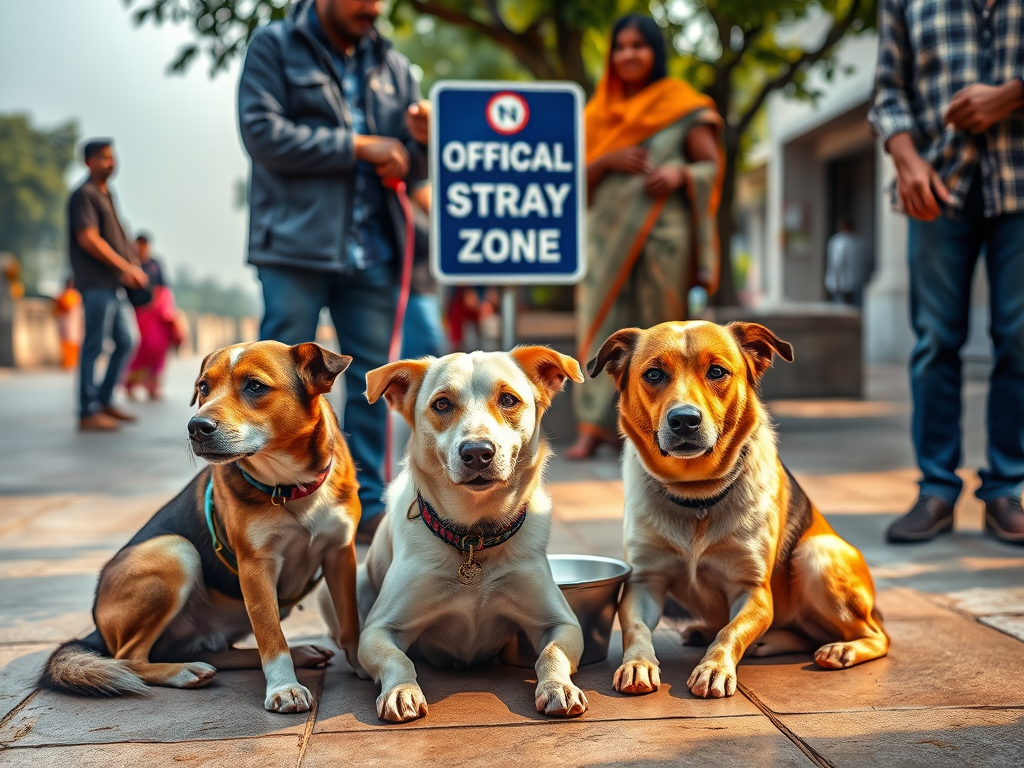
The Supreme Court of India, in a landmark judgment on August 22, 2025, has significantly modified its earlier stance on the management of stray dogs in Delhi and the National Capital Region (NCR). The new ruling seeks to strike a delicate balance between ensuring the safety of residents and upholding the welfare of community animals, paving the way for a more compassionate and scientific approach to a long-standing urban issue.
This pivotal decision has been largely welcomed by animal welfare organizations, while also addressing the anxieties of citizens concerned about the risks of stray dog encounters.
From Relocation to Rehabilitation: The Core of the Judgment
The apex court’s revised directive moves away from a controversial “catch-and-keep” policy. Instead of permanently housing all stray dogs in shelters, the court has now aligned its ruling more closely with the Animal Birth Control (ABC) Rules, 2023.
The key takeaways from the judgment are:
- Trap-Neuter-Vaccinate-Return (TNVR) is Key: The court emphasized that stray dogs are to be captured, sterilized, vaccinated against rabies, and then returned to their original localities. This is a scientifically backed method to manage the stray population humanely and effectively. Removing dogs from an area often creates a “vacuum effect,” where new, un-vaccinated dogs move in.
- Exceptions for Public Safety: The ruling makes a clear exception for dogs that are confirmed to be rabid or exhibit overtly aggressive behavior. Such animals will not be released and will be managed in shelters or designated facilities to ensure public safety.
- No More Public Feeding: In a significant move to reduce human-animal conflict, the Supreme Court has prohibited the feeding of stray dogs in public spaces like streets, parks, and building entrances.
- Mandatory Designated Feeding Zones: To ensure community dogs do not starve, the court has mandated that municipal authorities must establish dedicated feeding zones in every ward. This organized approach aims to manage feeding responsibly, monitor the health of the local dog population, and minimize inconvenience to the public.
A National Policy on the Horizon
Recognizing that the issue is not confined to Delhi, the Supreme Court has expanded the scope of the case to facilitate the framing of a uniform national policy for stray dog management. This is a crucial step towards creating a standardized, humane, and effective approach across the country, which has often seen a patchwork of conflicting local rules and enforcement.
What This Means for Delhi Residents and Dog Feeders
The judgment brings clarity and responsibility to all parties involved:
- For Resident Welfare Associations (RWAs) and Municipalities: The onus is now on them to work collaboratively to identify and maintain hygienic, designated feeding spots. They are also responsible for ensuring the ABC program is implemented effectively in their areas.
- For Animal Lovers and Feeders: While their right to care for animals is acknowledged, it now comes with the responsibility of adhering to the new rules. Feeding must be done only in the designated zones, and feeders are encouraged to actively participate in the sterilization and vaccination drives in their communities.
- For the General Public: This ruling aims to create safer public spaces by ensuring the stray dog population is vaccinated, sterilized, and less likely to be aggressive due to starvation or territorial disputes.
The Supreme Court’s decision marks a pivotal moment in the discourse on urban wildlife in India. By championing a scientific and compassionate framework, the court has laid down a roadmap for peaceful coexistence between humans and community animals in Delhi and beyond.
Leave a Reply